意大利也乱了:多地爆发示威流行,奢侈品店紧急封窗关门|外刊精读
原创 Soren 2026-10-26 10:44 江苏

抗议生活成本与公共服务的浪潮,正席卷欧洲多国——法国之后,意大利也乱了。上周末,米兰等地的示威演变为骚乱:蒙面年轻人纵火、洗劫商店,两天内上百名警察受伤,约50人被捕、过半是未成年人。
我们看一段外媒的报道。
01
原文
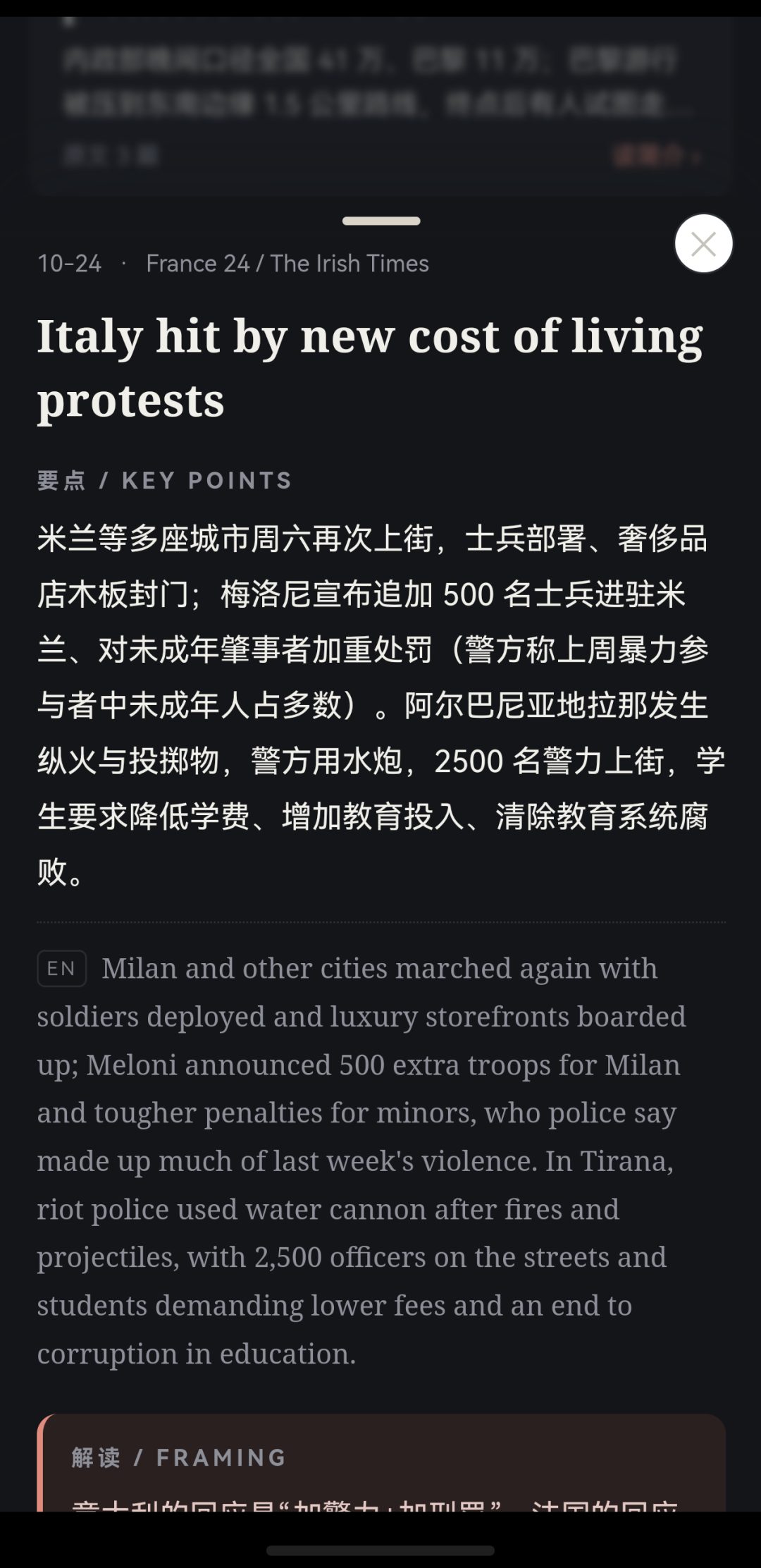
Milan and other cities marched again with soldiers deployed and luxury storefronts boarded up; Meloni announced 500 extra troops for Milan and tougher penalties for minors, who police say made up much of last week's violence. In Tirana, riot police used water cannon after fires and projectiles, with 2,500 officers on the streets and students demanding lower fees and an end to corruption in education.
02
精读
1
Milan and other cities marched again with soldiers deployed and luxury storefronts boarded up;
米兰等多座城市再次上街,街头部署了士兵,奢侈品店的店面用木板封了起来;
先看骨架:
主语是 Milan and other cities,谓语 marched。城市不会走路,上街的是城里的人——用城市代指人,是新闻英语省字的常用写法。
with soldiers deployed and luxury storefronts boarded up 是 with 复合结构:with + 名词 + 过去分词,两个画面并排摆开——士兵上了街,名店钉上了木板。
一句话装下两个画面,不用开两个句子。
storefront 是名词,读 /ˈstɔːfrʌnt/,意思是“店面、临街铺面”,英文解释是 the front of a shop that faces the street。
storefront 拆开就是 store(商店)+ front(正面、临街的一面)——商店朝街的那张“脸”,就是店面。
常见搭配有:
a row of storefronts(一排店面)
empty storefronts(空置的店面)
street-level storefronts(临街铺面)
文中 luxury storefronts boarded up 的意思是:奢侈品店的店面被木板封住。
来看几个例句。关于城市化话题,我们可以说:
Empty storefronts tell a story that no statistic can.
空荡的店面,比任何统计数字都更能说明问题。
关于商业话题,我们可以说:
The bakery's storefront is small, but the queue outside is not.
这家面包店的店面不大,门口的队却不短。
很多农村自建房,一楼是店面、楼上是家,我们可以写一个句子:
A so-called ordinary rural house often has a storefront downstairs and a family upstairs.
所谓“普通”的农村自建房,常常是一楼店面、楼上住家。
board up 是动词短语,读 /bɔːd ˈʌp/,意思是“用木板封住”,英文解释是 to cover a window or door with wooden boards, usually to protect it or because it is not in use。
board 是“木板”,up 有“封上、钉牢”的意思——把木板一块块钉上去,门窗就封死了。
常见搭配有:
board up the windows(用木板把窗户封上)
board up a shop(把店铺封起来)
be boarded up for the winter(封门过冬)
文中 luxury storefronts boarded up 的意思是:奢侈品店的门面被木板封死——木板钉上去,是防砸,不是装修。
来看几个例句。关于城市化话题,我们可以说:
Shops along the coast were boarded up before the storm.
暴风雨来临前,沿海的店铺都钉上了木板。
关于商业话题,我们可以说:
The old cinema has been boarded up for years.
那家老电影院已经封了好几年。
2
Meloni announced 500 extra troops for Milan and tougher penalties for minors, who police say made up much of last week's violence.
梅洛尼宣布向米兰增派 500 名士兵,并对未成年人加重处罚——警方称,上周的暴力事件中未成年人占了很大一部分。
先把结构捋直:
主干是 Meloni announced,后面跟两个并列宾语——500 extra troops for Milan 和 tougher penalties for minors。
who police say made up much of last week's violence 是非限制性定语从句,修饰 minors;
从句里 police say 是插入语,真正的谓语是 made up,宾语是 much of last week's violence。
made up 在这里是“占(比例)”。
这句真正值得学的是“变化”的表达。中文说“增派 500 名士兵”“对未成年人加重处罚”,都是动词;英文给的是 500 extra troops、tougher penalties——形容词(而且是比较级)加名词。
再看第三句的 lower fees:中文“降低学费”,英文还是“比较级形容词 + 名词”。变化没有用动词,而是藏进了形容词里。
这就是我们以前讲过的:英文的形容词比较级,常常对应中文里的“变化性动词”。再往大处说,是“英文名词优势、中文动词优势”——英语偏好静态表达,喜欢用名词短语装动作;汉语侧重动态过程,句中多用动词短句。
新闻英语尤其爱这么写:名词短语紧凑,能直接挂数字,施动者还可以退场,语气显得客观。
再记几个同款:
a bigger budget(增加预算)
higher taxes(加税)
a longer delay(拖得更久)
a colder week(降温)
翻回中文,动词自己就冒出来了。
顺带说一句,这个用法在 2016 年考研英语一的 Text3 里也出现过:
The study found that, among prosecuted firms, those with the most comprehensive CSR programmes tended to get more lenient penalties.
研究发现,在被起诉的公司中,企业社会责任项目最全面的那些公司,往往减轻处罚。
注意 more lenient penalties 和 tougher penalties 是同一个模子:比较级形容词 + 名词,中文都得翻成“加重/减轻处罚”。
回到文中来,minors 是名词 minor 的复数,读 /ˈmaɪnəz/,意思是“未成年人”,英文解释是 people who are not yet legally adults。
minor 作形容词是“较小的、次要的”,和 major 相对——法律上把“还没长大、还不能负全责的那一类人”单独拎出来,就是名词 minors。
常见搭配有:
minors under 18(18 岁以下的未成年人)
protect minors(保护未成年人)
sell alcohol to minors(向未成年人卖酒)
文中 tougher penalties for minors 的意思是:对未成年人加重处罚。
来看几个例句:
The law bars minors from buying alcohol.
法律禁止未成年人买酒。
关于社交媒体,我们可以说:
Online platforms are under pressure to keep minors away from addictive feeds.
平台正面临压力,要让未成年人远离令人上瘾的信息流。
U17女足世界杯中国3:2美国,中国队三战全胜、小组第一出线。我们可以写一个句子:
The U17 win reminded everyone that minors can carry a stadium's hopes.
这场 U17 的胜利提醒所有人:未成年人也扛得起整座球场的期待。
3
In Tirana, riot police used water cannon after fires and projectiles, with 2,500 officers on the streets and students demanding lower fees and an end to corruption in education.
在地拉那,有人纵火、投掷物品,防暴警察随后动用了水炮;2500 名警力上街,学生们要求降低学费、终结教育领域的腐败。
主干很短:riot police used water cannon。
after fires and projectiles 是时间状语——after 后面直接接名词,不用从句,还是省字。
water cannon 是“水炮”,cannon 本义是“大炮”。
with 2,500 officers on the streets and students demanding lower fees... 又是 with 复合结构,这次两个并列:officers + on the streets(介词短语),students + demanding(现在分词)——一个结构里塞下“警力上街”和“学生喊话”两个画面。
lower fees 就是第二句讲过的套路:不是 reduce fees,而是 lower fees——比较级形容词 + 名词,中文“降低学费”。
projectiles 是名词 projectile 的复数,读 /prəˈdʒektaɪlz/,意思是“投掷物、抛射物”,英文解释是 objects that are thrown or fired through the air, especially in an attack。
project 是“投掷、投射”,-ile 是名词后缀——被扔出去的东西,就是 projectile;石头、瓶子、燃烧物,都算。
常见搭配有:
fire projectiles(发射抛射物)
hurl projectiles at sb(向某人投掷物品)
a projectile weapon(投射武器)
文中 after fires and projectiles 的意思是:在发生纵火、有人投掷物品之后。
来看几个例句。关于体育话题,我们可以说:
Fans threw projectiles onto the pitch, and the match was stopped.
球迷向场内投掷杂物,比赛被迫中断。
关于社会话题,我们可以说:
Police in riot gear dodged bottles and other projectiles.
防暴警察躲开飞来的瓶子和其他投掷物。
前几天西藏发生地震。真到地震时,最危险的往往是家里飞起来的东西。我们可以写一个句子:
In a quake, the deadliest projectiles are often the things hanging on your walls.
地震时最致命的“投掷物”,往往就是挂在墙上的那些东西。
今天分享到这里,感谢阅读!
本文转载自微信公众号「经济学人双语精读」,查看原文。版权归原作者所有,如有侵权请联系删除。